





Extratropical Cyclone Models

Extratropical Cyclone Models

Text

Description

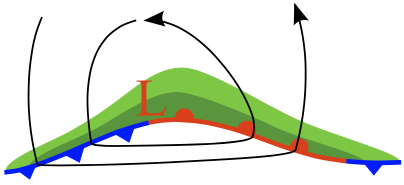
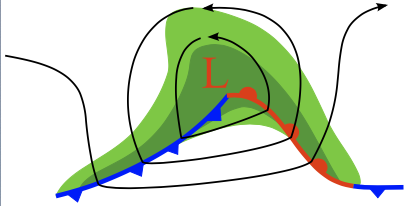
This article describes in basic terms the two most commonly quoted models for extratropical cyclone development (cyclogenesis).

The Norwegian Cyclone Model

Early in the 20th century, Norwegian meteorologists formulated a model for an extratropical cyclone that develops as a disturbance along the boundary (front) between the polar and mid-latitude air masses. The disturbance distorts the front into a wavelike configuration.

Wave forms on front (image source: NOAA)

As the pressure within the disturbance decreases, the disturbance assumes the appearance of a cyclone with its characteristic counter-clockwise flow. Southerly winds take warm air northward ahead of the storm and northerly winds bring cold air south behind it. Besides rotating counter-clockwise, the air also flows inward toward the center of the cyclone.

Categories
The full content of this page is available to registered users only.

SKYbrary Partners:

Safety knowledge contributed by: