Shamal
Shamal


Description
A Shamal is a northwesterly wind blowing over Iraq and the Persian Gulf states (including Saudi Arabia and Kuwait), often strong during the day, but decreasing at night. This weather effect occurs from once to several times per year, mostly in summer but sometimes in the winter months. The resulting wind typically creates large sandstorms that impact Iraq, most sand having been picked up from Jordan and Syria.
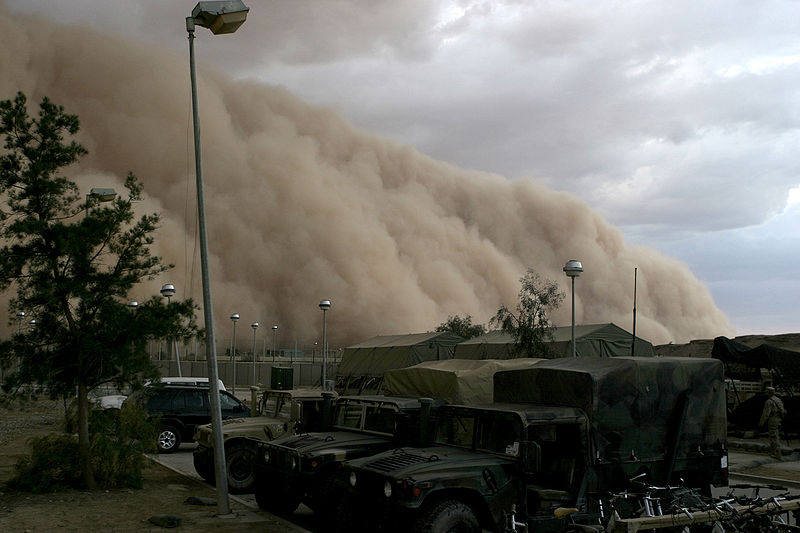
A massive dust storm cloud (haboob) close to enveloping a military camp as it rolls over Al Asad, Iraq, just before nightfall on April 27, 2005. DoD photo by Corporal Alicia M. Garcia, U.S. Marine Corps. (Released)
Summer Shamal
When a passing storm with a strong cold front passes over the mountains of Iran, the leading edge of a mass of relatively cooler air kicks up dust and sand, sending it aloft. Maximum temperatures nevertheless average more than 41°C during the period.
Winter Shamal
In Iraq, where winter storms can bring heavy snow to the terrain, a layer of dust can settle onto the snowpack.
A winter shamal is associated with the strengthening of a high pressure area over the peninsula after the passage of a cold front while a deep trough of low pressure maintains itself over areas east of the Persian Gulf. This leads to a strong northerly wind over the Persian Gulf for periods of up to 5 days, which is associated with cold temperatures.
The places around the Middle East most likely to see the winter shamal lie near Lavan Island, Halul Island and Las Rakan. They persist from 24-36 hours during the winter and occur as frequently as 2 or 3 times per month in December and February. A persistent 3-5 day event occurs only once or twice per winter and is accompanied by very high winds and seas.
Flight Safety
Shamals last 3-5 days with a consequent impact on flight operations. The associated dust and sandstorm is several thousand feet deep. Wind speeds can reach up to 40kts and visibility is reduced.
Airport Infrastructure
Sand dunes build up on roads and aircraft movement areas, which takes time and considerable resources to clear. The storms can also damage infrastructure.
Aircraft
Dust and sand ingestion into aircraft engines may cause reductions in power and occasionally lead to engine failure. Should dust and sand find their way into the flight deck then problems with avionics may occur.
Related articles
Categories