



Volcanic vortex ring (VVR)

Volcanic vortex ring (VVR)

Description

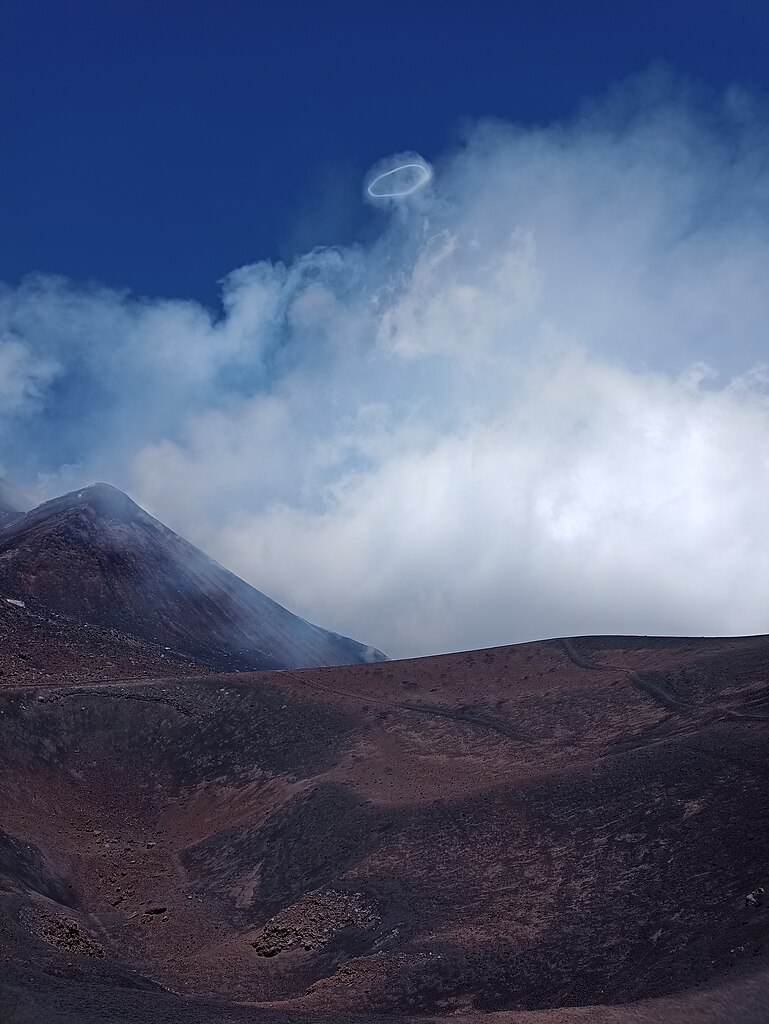
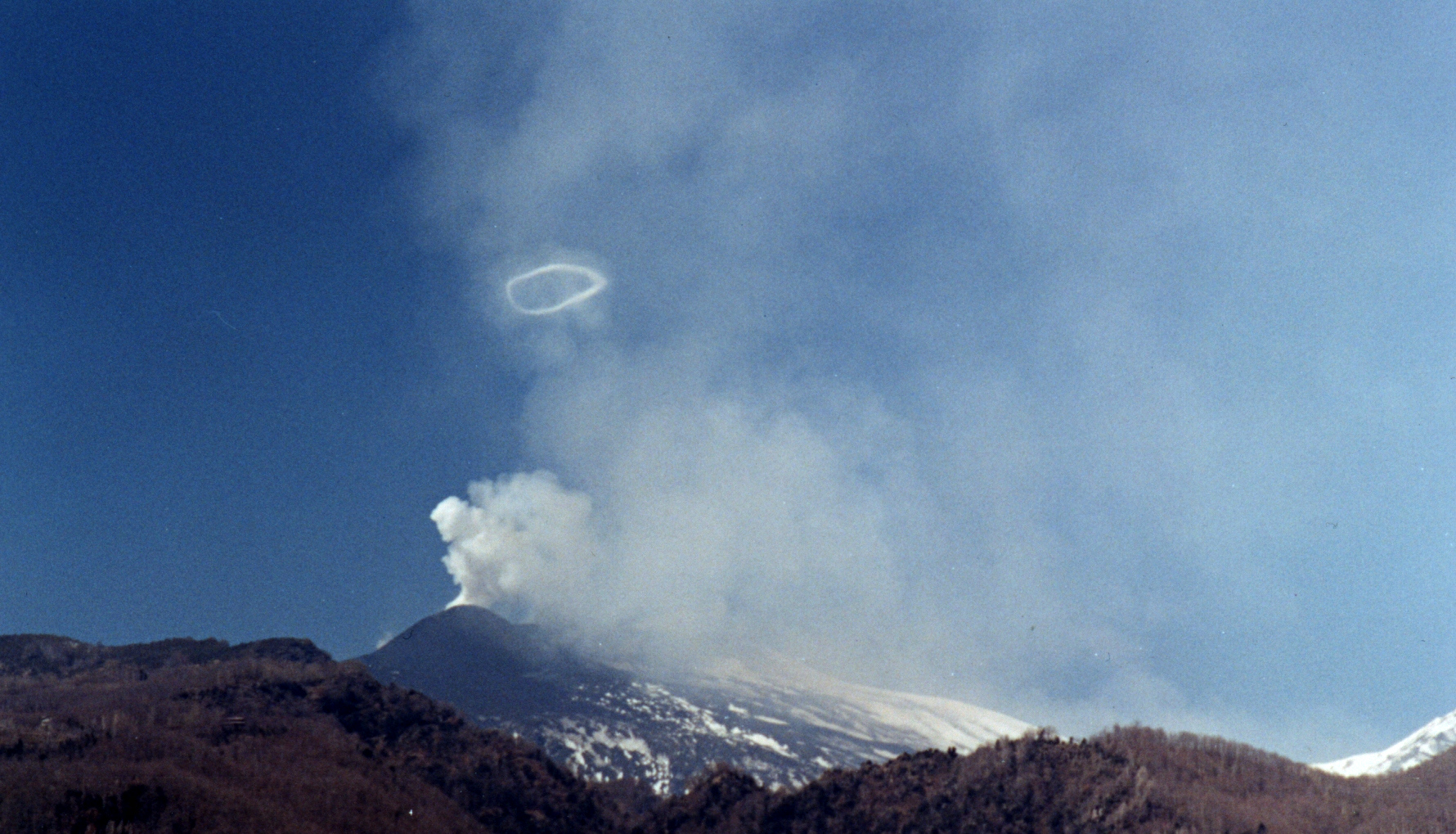
Volcanic vortex rings (VVR) are a rare phenomena generated by the combination of rapid gas release and the vent shape of a volcano.

volcanic vortex ring

Smoke ring over Mount Etna, Sicily, Ital, August 2023 [Source Wikicommons, Author: Jpakkala]

volcanic vortex ring

Smoke ring over Mount Etna, Sicily, Ital, c.1970 [Source Wikicommons, Author: Angelosalemi]

Formation

In the magma conduit feeding the volcano, small gas bubbles form at about a depth of 3 km, coalesce and buoyantly rise up in the form of large pressurised gas pockets (slugs) which can potentially reach the surface depending on the balance between gas volume and magma viscosity. The gas slug is mostly comprised of water vapour, sulphur dioxide and carbon dioxide. When the pressurised slug of gas arrives near to the top of the magma conduit, the slug experiences a pressure difference with the outside atmosphere and explodes slightly below an overlying thin magma shell.

Observations show that in the moments before a VVR appears, a puff of hot water vapour is quickly emitted from a vent. The water vapour rolls-up at the vent borders forming tubular vortices, while its central part is pushed out at higher speed. dragging all the vortices with it. The ring forms and is visible by condensation, with a radius comparable with the size of the emitting vent. The rings are usually white in colour but in a few cases appear brownish probably due to the presence of volcanic ash. As the gas slug is expelled from the volcano it has a temperature close to that of magma but rapidly cools at it moves upwards and interacts with the surrounding atmosphere. 

The rings can persist for several minutes and reach heights of several thousand feet above the volcano, rising at speeds between 2 and 40 m/s. 

Flight safety considerations

Flight in the vicinity of any active volcano should be avoided.

Turbulence and high temperatures (with consequent impact on performance) can be expected if flying into the rising slug of gasses, which may also be toxic if they enter the aircraft cabin. The plume rising from the volcano is also highly likely to contain high concentrations of volcanic ash.

Volcanic Ash (SKYclip)

Related articles

Further reading

Categories

SKYbrary Partners:

Safety knowledge contributed by: