


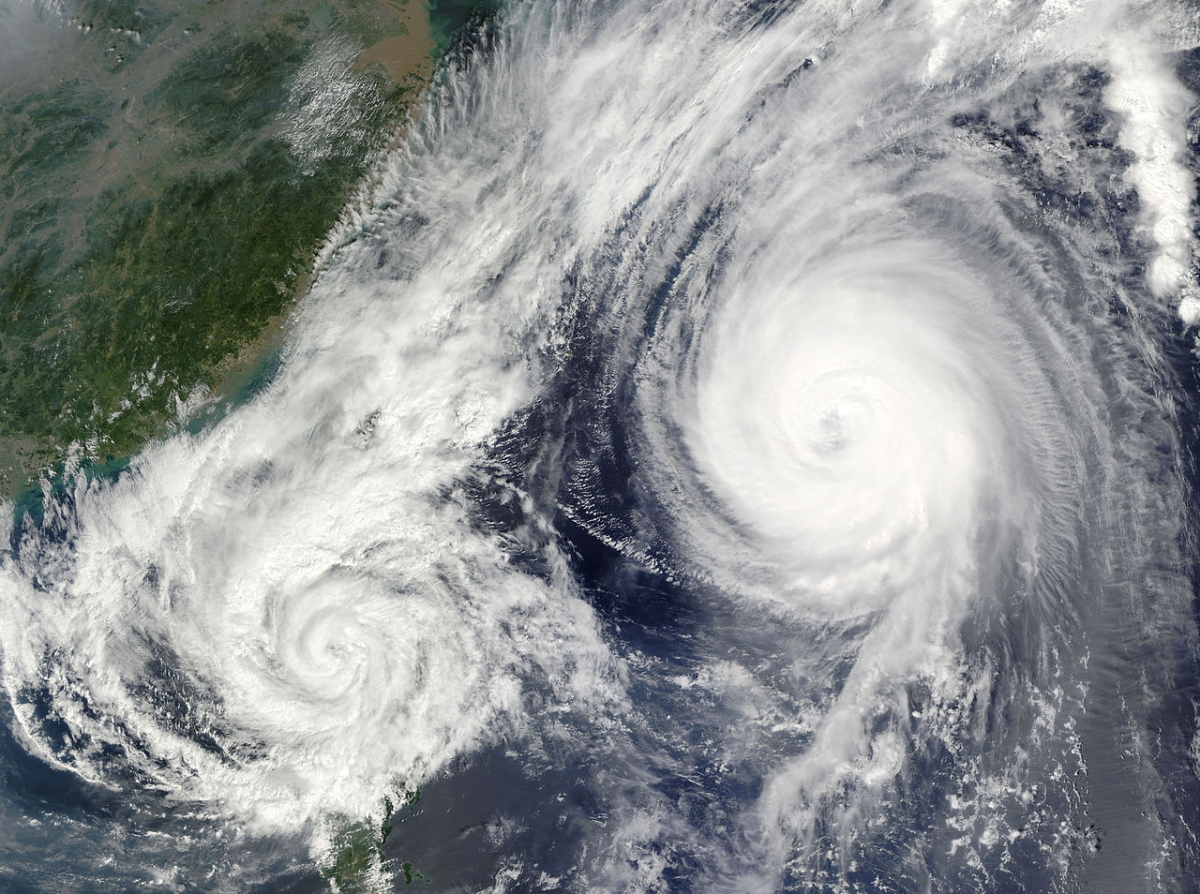



The Fujiwhara effect, sometimes referred to as Fujiwara interaction or binary interaction, is a phenomenon that occurs when two nearby cyclonic vortices orbit each other and close the distance between the circulations of their corresponding low-pressure areas. The effect is named after Sakuhei Fujiwhara, the Japanese meteorologist who initially described the effect in the 1920s. Binary interaction of smaller circulations can cause the development of a larger cyclone, or cause two cyclones to merge into one. Extratropical cyclones (midd and high latitude lows) typically engage in binary interaction when within 2,000 kilometres (1,200 mi) of one another, while usually smaller tropical cyclones typically interact within 1,400 kilometres (870 mi) of each other.