



Line Up

Line Up

Description

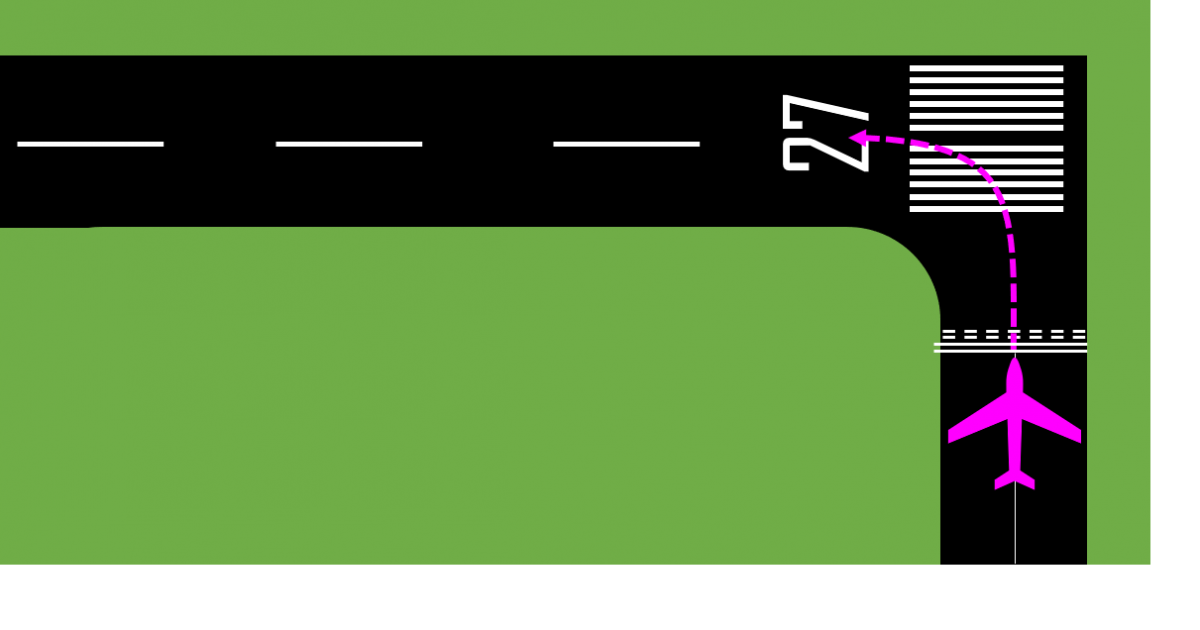
Line up is a part of the ground movement of an aircraft that normally connects the taxiing phase and the take off roll. It starts when an aircraft moves past the runway holding position of a taxiway and ends when the aircraft gets aligned with the runway centreline.

Essentially, lining up means that the aircraft enters a runway. Once the nose has passed the holding point, the runway is to be considered occupied regardless of the fact that the aircraft may still be on the taxiway.

An aircraft lining up a runway

On controlled aerodromes, pilots/crews need to obtain an explicit clearance before entering a runway, either for crossing purposes or with the intent to take off. An active runway is associated with the inherent risk of fast moving aircraft with limited manoeuvrability. Therefore, special care has to be taken by both pilots/crews and air traffic controllers on the following facts:

  • A line up clearance is not a take-off clearance
  • On no occasion should a clearance be passed when the pilot is engaged in line up or take-off manoeuvres (ICAO Doc 9432)
  • Aircraft shall not be permitted to line up and hold on the approach end of a runway-in-use whenever another aircraft is effecting a landing, until the landing aircraft has passed the point of intended holding (ICAO Doc 4444).
  • During the line-up maneuver there is an increased risk for runway incursion, excursion or loss of separation events (see below).

Risk Factors associated with Line Up

There are several risk factors associated with the line-up maneuver which need to be considered and safely managed both by pilots/crews and air traffic controllers in order to avoid a runway incursion, excursion or loss of separation event:

  • Time pressures (e.g. schedule, capacity or other efficiency pressures)
  • Application of only minimum traffic separation minima by ATC
  • Use of immediate or conditional departure clearances by ATC
  • Expectation bias and distractions (both, pilots and ATCOs)
  • (Late) runway or intersection changes
  • Engine Out Taxi-Operation
  • Backtrack or Line-up via an angled taxiway
  • Slippery taxiway and runway surfaces
  • Reduced or low visibility, sun-glare, darkness
  • Quality of markings/lighting installations
  • Availability and operability of lit stop bars
  • Multiple line-up operation
  • Restricted line of sight towards holding points for ATCOs
  • Ongoing runway inspection or runway crossing operation
  • Cold weather operations or weather in the departure sector 

Mitigation and Solutions

In daily practice, a safe line-up can only be accomplished if both relevant groups of frontline operators (pilots and air traffic controllers) always put runway safety considerations ahead of any efficiency considerations such as capacity, commercial or punctuality pressures.

To ensure this, it is vital that the aircraft operators (e.g. airlines or aircraft owners) as well as the air navigation service providers not only deliver robust Standard Operating Procedures (SOP)  for safe line-up operations but also establish and maintain a positive and safety minded work environment in which frontline operators always feel psychologically free to reject any time and efficiency pressures for any reason.

How this can be achieved in practice is further detailed in the Global Action Plan for the Prevention of Runway Incursions (GAPPRI)  as well as in the Global Action Plan for the Prevention of Runway Excursions (GAPPRE)  which make several recommendations regarding a safe line-up. The following list highlights some, but not all, of the recommendations:

Pilots:

  • Do not accept a line-up clearance if not being actually ready (including having received the cabin ready/secure report). Especially in case of a runway or intersection change which was not anticipated it is of utmost importance not to rush but do all necessary work in a calm manner and when being stationary (see GAPPRE OPS 8, 28; GAPPRI AO9, AO17, 18).
  • Always feel free to use the wording “unable” to signal ATC if not being ready, e.g. if asked for an immediate or expeditious departure. Active intervention into challenging ATC-clearances or active intervention on the flight deck, e.g. by the PM, are most effective in preventing runway incursions and excursions (see GAPPRE OPS 3, 6, 24; GAPPRI AO14, 15).
  • Proactively identify and mitigate any line-up specifics, e.g. angled taxiways, backtracks, non-standard holding-points, etc. during the pre-departure TEM-briefing. Try to anticipate and consider any runway or intersection change in advance (see GAPPRE OPS 8; GAPPRI AO20).
  • Advise ATC in advance if needing additional time on the runway, e.g. for an engine run-up, a weather-radar scan of the departure sector, or for any other reason. This helps them to better preplan their traffic spacing (see GAPPRE OPS 28, GAPPRI AO21).
  • Always positively identify and call-out the correct line-up intersection. Especially in darkness or reduced visibility ensure line-up is made correctly via the runway centreline instead of a wrong taxi-line or via the runway edge lights (see GAPPRE OPS 27, 28; GAPPRI AO29).
  • Always remember the CRM -saying: “Doubt is a fact – Verbalize it”. If at least one pilot on the flight deck is unsure if having received a line-up or take-off clearance query with ATC immediately and, if necessary, stop immediately (see GAPPRE OPS 27, 28; GAPPRI AO13).

ATCOs:

  • Issue the line-up clearance only when the aircraft is at or approaching the runway holding position and there are no intersections on the taxiway ahead of the aircraft (see GAPPRI ANSP 20).
  • Do not pressure pilots/crews. Neither generally expect an aircraft being ready at the holding point nor expect pilots/crews being generally ready for expeditious departure.  E.g. actively ask pilots, if being “ready for immediate departure” instead of expecting it (see also ICAO DOC 4444, 12.3.4.10). Consider that a safe line-up and a safe start of take-off roll requires time. Allow pilots/crews at least 20-30 seconds to start the take-off roll after having received the take-off clearance to mitigate any safety consequences. This time is even required if the aircraft has already lined up and is ready and stationary at the take-off position, especially in case of a jet aircraft. (Background: reading back the take-off clearance by the PM as well as both pilots without distraction cognitively translating and thereby correctly understanding the wind information while possibly transferring controls takes a minimum of 5sec, for safety reasons just thereafter the PF should advance engine thrust which may take, depending on the aircraft type, a minimum of 10-15sec, add a minimum of 5-10sec as safety margin see also GAPPRE ANSP 2; GAPPRI ANSP 21, 25, AO 21)
  • To prevent possible loss of separation or runway incursions events always consider in your traffic spacing that go-arounds are the default option for pilots/crews, not the landing (see GAPPRE OPS 30; GAPPRI ANSP 21, 22, 23, 25, 26).
  • To prevent aircraft from falsely lining up for departure with the runway edge lights ensure runway centerline lights are be used together with runway edge lights whenever runway edge lights are switched on (see GAPPRE ANSP 7).
  • If the take-off clearance is not issued together with the line-up clearance the phrase “line-up and wait” should be used (see GAPPRI ANSP 22 and ICAO DOC 4444 12.3.4.10).
  • When an aircraft is instructed to line up and wait due to a reason other than usual runway traffic spacing, provide to the pilot/crew the reasons for waiting (see GAPPRI ANSP 23, 26).
     

Phraseology

Normally, a line up clearance includes a runway designator and is combined with either an instruction to wait or followed by a clearance to start the take off roll. The latter is added in order to avoid confusion about what is expected of the aircraft when lined up. The runway designator is added as a safety measure against:

  • lining up on the wrong surface (the crew is supposed to check once again that the markings on the ground match the clearance received on the frequency), especially during multiple runway operations
  • the wrong aircraft accepting the clearance (e.g. due to call sign confusion)

Line up clearances are to be read back by the pilot/crew or to be rejected by them using the wording “unable”, if unable to comply for any reason. 

General examples:

  • [Callsign], line up runway [designator] and wait - this phrase is used by controllers to clear an aircraft onto a runway when it is not yet possible to issue a take off clearance due to e.g. an aircraft or a vehicle that is still on or crossing the runway (see picture below). It is important that pilots/crews are aware that the use of a line up and wait (LUAW) instruction is not an authorization to take-off. However, even though pilots/crews often read-back the LUAW clearance correctly it still often happens that they continue rolling and start the take-off without having received the take-off clearance, e.g. due to expectation bias, distraction or time pressure. To mitigate this risk pilots are reminded to ensure a takeoff clearance has been received before beginning a take-off roll and of the importance of maintaining situational awareness during LUAW operations, especially with intersecting/crossing runways.

In this example the controller may clear the jet to line up but will not issue a take off clearance before the light aircraft has vacated the runway
  • [Callsign], line up runway [designator], cleared for take off or just “[Callsign], runway [designator] cleared for take off” - these phrases are used when there is no need for the aircraft to hold on the runway. Note that it also does not require the crew to make an immediate take off so it is possible that the aircraft remains on the runway for a certain time.
  • The line up instruction when a controller plans to use an immediate take off clearance (which has to be agreed between the controller and the pilot/crew beforehand) includes this clarification: "[Callsign], line up. Be ready for immediate departure". Note that this phrase is to be used with caution as there is a risk of the frequency being blocked by a lengthy transmission coinciding with the intended moment of issuing of the take off clearance.

Normally, a "line up and wait" instruction would be followed by a take off clearance as soon as the reason for holding (e.g. traffic vacating or crossing the runway, wake turbulence separation, etc.) is no longer valid. If this does not happen within a reasonable period of time (e.g. 90 seconds but this may vary according to specific circumstances), pilots are normally supposed to notify the controller about their presence on the runway. There is no standard ICAO phraseology for this case so a plain language message may be used, e.g. "Tower, [Callsign] runway [designator] ready for departure". In some countries, e.g. the USA, an approved phraseology has been developed for such situations: "[Callsign] holding in position runway [designator]".

The line up instruction may also be a part of a conditional clearance, e.g. “[Callsign], behind A320 on short final, line up behind”. In this case, the line up clearance is issued before the other traffic has passed so the pilot/crew receiving it is expected to wait and give way to the landing aircraft, and line up after the pilot/crew has positively identified the relevant aircraft and it has passed their position.

Accidents and Incidents

On 9 January 2022, a Boeing 777-300 commenced takeoff without clearance in good night visibility as another Boeing 777-300 was crossing the same runway not far from the midpoint as cleared. Only after a repeated stop call did the first aircraft initiate a rejected takeoff. The first aircraft still stopped well before reaching the position where the other aircraft was crossing. The misperceived lineup clearance was accompanied by the crew not adequately monitoring the radio frequency, regarding both their own clearance and that given to crossing traffic ahead.

On 16 February 2023, a Boeing 737-700 took off from Las Vegas in excellent night visibility aligned with the right-hand runway edge lights instead of the unlit centreline without pilot awareness during or after the takeoff. Minor nosewheel tyre damage found after flight did not trigger an operator investigation, and the airport only discovered the runway edge lighting damage two days later and did not identify and advise the operator until over a week had passed. The experienced captain had misaligned the aircraft whilst the inexperienced first officer was too busy to monitor the captain’s actions.

On 27 April 2020, an ATR 72-200 freighter crew attempted a night takeoff in good visibility aligned with the edge of runway 06 and did not begin rejecting it until within 20 knots of the applicable V1 despite hearing persistent regular noises which they did not recognise as edge light impacts and so completed the rejection on the same alignment. The Investigation noted both pilots’ familiarity with the airport and their regular work together and attributed their error to their low attention level and a minor distraction during the turnround after backtracking.

On 8 January 2010, an Air Berlin Boeing 737-800 attempted to commence a rolling take off at Nuremburg on a runway pre-advised as having only  medium braking action. Whilst attempting to position the aircraft on the runway centreline, directional control was lost and the aircraft exited the paved surface onto soft ground at low speed before the flight crew were able to stop it. The event was attributed to the inappropriately high taxi speed onto the runway and subsequent attempt to conduct a rolling take off. Relevant Company standard operating procedures were found to be deficient.

On 10 February 2010 a KLM Boeing 737-300 unintentionally made a night take off from Amsterdam in good visibility from the taxiway parallel to the runway for which take off clearance had been given. Because of the available distance and the absence of obstructions, the take off was otherwise uneventful. The Investigation noted the familiarity of the crew with the airport and identified apparent complacency.

Categories

SKYbrary Partners:

Safety knowledge contributed by: